There's one place that I know we've all been to: The Zone. Everyone's been in "The Zone" and not even necessarily when animating, it could be while doing other things. It's that point of focus where you can't see anything else, can't hear anything else, and can't do anything else. It's sometimes the preferred mode that you want to work in because you feel like (and this quite possibly may be true more often than not) you get a lot of good, quality work done. But, where is that point in "The Zone" that isn't so beneficial anymore? That point where you've been in "The Zone" too long and can't see the big picture anymore? Being in "The Zone" may sometimes become a determent to our animation. It's something that I like to call "Animation Goggles" (quite similar to beer goggles). Whether you've been trying to re-work timing, finesse an arc, get just the right amount of drag and follow-through, just enough overshoot and settle, we all get to a certain point where we're looking at our shot with Animation Goggles and can't really tell whether there are better animation decisions that you can be making. What's so funny is that when you're looking through those goggles, you can't really tell what else to do or what else to fix after a while, but then when you look back on it at a later date you say to yourself "What the heck was I thinking???". But, have no fear (well, maybe a little), the best remedy I've been told and found to Animation Goggles is to SHOW PEOPLE YOUR WORK. Which I'll cover in another post. Keep that ball bouncin'!
How does the saying go? Different strokes for different folks? Whatever floats your boat? To each their own? These are just other ways of saying that people react to and are affected by things differently which leads to what I want to talk about in this post: inspiration.
What do you do to get inspired? Do you have a little routine or ritual before you start working? Do you have something to look at and surround yourself with while you work? Is there a particular type of music or sounds you listen to? What or where do you go to when you need it?
Inspiration is an amazing thing. The equivalent of inspiration suddenly hitting an artist is like a bolt of lightning striking; it's that instantaneous and shocking. In the blink of an eye, out of nowhere, you get this urge, this need to create something and you can see it as clear as day. There are certain things that I have around me whenever I'm working. Surrounding both my desks at work and at home are: toys ranging from action figures, to die cast metal figurines, to vinyl toys, to stuffed toys, and even dolls (the manly kind, ehem), books about film, animation, drawing, art books, and comic books, and I always listen to music but the type of music I listen to really depends on how I feel at the moment. Those three things are often times way more than enough to keep me going while I work. I especially find that having books out and open while animating or drawing really inspire me, help me, and really take my work to that next level noticeably. I don't know how to explain it, but it just works. I feel like my work is better when I do that. It's almost like how the food that you're eating tastes better when you watch the Food Network (or is that just me?). Whatever things or methods get you inspired, take the time to do them, practice them, engage in them, surround yourself with them, it will work wonders. I saw this TED talk by John Cleese on creativity a while back and I think it's quite appropriate about the topic of inspiration. Check out it out, and keep that ball bouncin'!
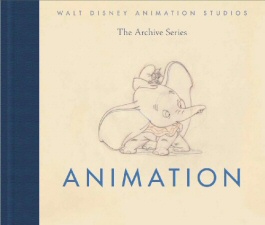
Hey Everyone! Sorry for the delay between posts, I just started getting back into the groove of everything again (work, school, etc.). For this post I wanted to talk about some Animation Gold. If knowledge is power, and books are full of knowledge, than books are gold! I have plenty of animation books, but there's a set of books that I got recently that are probably the best ones I've gotten so far. They're the latest addition to the Disney Animation Archive Series: The Nine Old Men.
This set is a box of nine flip books, every one of them done by one of the nine old men. Each one of the flip books contains scenes from different classic Disney movies. Being able to flip through these is such a good resource to have. It's amazing how strong their principles are and how apparently you can see them. I HIGHLY recommend it. I ordered this in the earlier part of last year and they finally came in. This is the fifth installment of the Disney Animation Archive series. The previous books before this set are fantastic also.
You can find all these books an Amazon here. Keep that ball bouncin'!
Happy new year, everyone! Class is back in session and I can't wait to get that ball bouncin'! So as I've mentioned in my first post, I am an animation student and I thought now would be a good time to shed some light on that subject. I'm an Animation Mentor student. I had applied a few times previously, but for one reason or another, it just wasn't the right time (financially, life, time, etc.). Then finally, the stars aligned and I was able to fully commit to attending. Then, what was even better, was that Advanced Placement had just opened up as I applied. So I submitted my reel and the mentors felt that I was ready to start at Class 04! Score! So, last term was my first term and it was Class 04: Intro to Acting. I learned SO much and it was SO much fun! Now, I'm in Class 05 and after getting a taste of acting in Class 04, I'm craving it more and more! It's just so fascinating with all of the little details, the nuances, and the complexity of it all. A lot of what I learn and have learned through my time at AM will influence a lot of what I write on the blog as well as my past experience at an Art School that didn't turn out to be what I was looking for in a school, but more about that in another post. So in case, you're curious, and so that you can size up how bad (or good) I am, I'm going to put myself out there and post some reels. The first is my progress reel from my last class, Class 04: Intro to Acting. The second reel is the reel that I used for advanced placement full of material that I had accumulated while working. Until here! And remember, keep that ball bouncin'!
Happy holidays, everyone! Merry Christmas and Happy New Year! I'm currently on break from work and from school. It's nice to be able to relax and just take each day as it comes as opposed to scheduling every single hour of every single day.
I always felt guilty if I didn't work every single day and if I didn't I felt like I wasn't working hard enough. Taking a break and stepping away from my art and work is one thing that I had to really get used to. I think that this is especially true in animation. It's good to be able to step away from your work from time to time and just live life. You only get one and it goes by so quickly so make sure to not take it for granted!
You need to experience what life has to offer not only so that you can live life to it's fullest, but also so that it will feed back into your animation. I regard animator's as the actors of animated films (I'll touch on this subject more in another post) and when we act out our shots for reference, we try to draw upon feelings and emotions that we've experienced in the past to get the most honest performance possible. If we don't have any experiences to draw from, then how can we get an honest performance? This touches a little bit on a topic I'd like to talk more about in another post that I'll entitle "Method Animating".
So go out and have experiences, feel emotions, and live life! Happy holidays! Keep that ball bouncin'!
Animation is hard... and rightfully so. If that's the case, then it would only make sense to keep things as simple as possible right? Right! So, why don't we keep things simple? It seems like after being told that over and over and over again, it continues to elude all of us at some point in time: whether it's the first time we're tackling something animation-wise, or we really already know better from experience but are choosing to over complicate things for one reason or another and will end up having to blow away a lot of our keys later on.
As simple as we think we're making it, MAKE IT SIMPLER! It's already challenging enough making sure that all of the principles are being executed correctly, why add more on top of that? Boil things down to their root essence, the bare bones in a sense, the pure guts and make it sing. This is especially true when you're still paying your dues and learning to animate and is even still true when you're working in a professional environment.
I hate to call it this, but it's somewhat of a rookie mistake, even though as I've mentioned previously in a post that there are no rules set in stone in animation. There quite a few rookie mistakes, or animation traps that we all tend to fall into while learning. I'll get around to more of those in later posts, but in the mean time, KISS! Keep It Simple Stupid and Keep that Ball Bouncin'!
Stephen
“Everything’s a Bouncing Ball.” I wish I fully understood exactly what this meant as soon as I started. This one hit much later than I care to admit when I first went to college. It makes so much sense to me now and why we all started with the bouncing ball when learning how to animate.
The bouncing ball exercise contains all of the foundations of animation and everyone knows that, but I didn’t realize it’s full application until way later on. The bouncing ball exercise shows you how the principles are applied in animation and because the subject matter is so simple it’s so easy to understand. But, as soon as the subject get’s a little more complex, than all of what we learned quickly goes out the window. When applying those things to more complex subjects, that’s where it becomes a challenge because it’s so easy to get lost in so many other different things. The same can be said for the transition out of body mechanics to acting, but that’s another topic for another time. The ball strips ALL of that away and really forces you to see those principles in action.
It’s a little frustrating hearing from other/newbie animation students and listening to them say, “I already know how to do a bouncing ball”, and yet it’s clearly evident that they haven’t applied any of the principles in their work. What I don’t think they understand is that it isn’t about the ball, it’s the principles behind them that are so important. Those same principles are what really makes animation sing and can be applied to all aspects of animation in one way or another. It’s the foundation. You don’t bake a cake by starting with the icing. Just as the saying goes in animation, everything really is a bouncing ball. Whether its the root of a character, the wrists on an arm, the ankles on a leg, or a corner of a mouth: Everything’s a bouncing ball.